
How Interactive Games Can Boost Your Child’s Cognitive Skills
Think, Learn, Solve: The Significance Of Cognitive Skills In Child Development
Cognitive skills are key to a child’s development, shaping how they learn, think, and solve problems. These skills involve mental processes that help children understand and interact with their surroundings. Recognizing the significance of cognitive skills is essential, as it lays the groundwork for lifelong learning and seamless daily functioning.
Cognitive development is a fascinating journey that shapes how a child perceives, thinks, and understands their world, driven by both natural instincts and learned experiences. This journey involves honing vital learning skills such as attention, memory, and the ability to think systematically over time. The impact of cognitive skills is extraordinary, as they are the secret keys to academic achievements, allowing students to process information effectively, understand concepts, solve math puzzles, improve reading comprehension, and unravel complex ideas. Additionally, cognitive advancement plays a pivotal role in emotional development and social interactions, as children apply critical thinking to navigate social situations.
In early childhood, several cognitive skills must develop for effective learning: attention span, memory (both short-term and long-term), reasoning and logic, auditory processing, visual processing, and language abilities. Paying attention is key to staying focused on tasks without getting side-tracked by distractions. Memory helps retain information and use it in new situations. Reasoning and logic organize information systematically. Language is crucial for communication and social success. Interactive toys often turn out to be a great tool for spurring cognitive development in children.
The Role Of Interactive Games In Enhancing Cognitive Skills
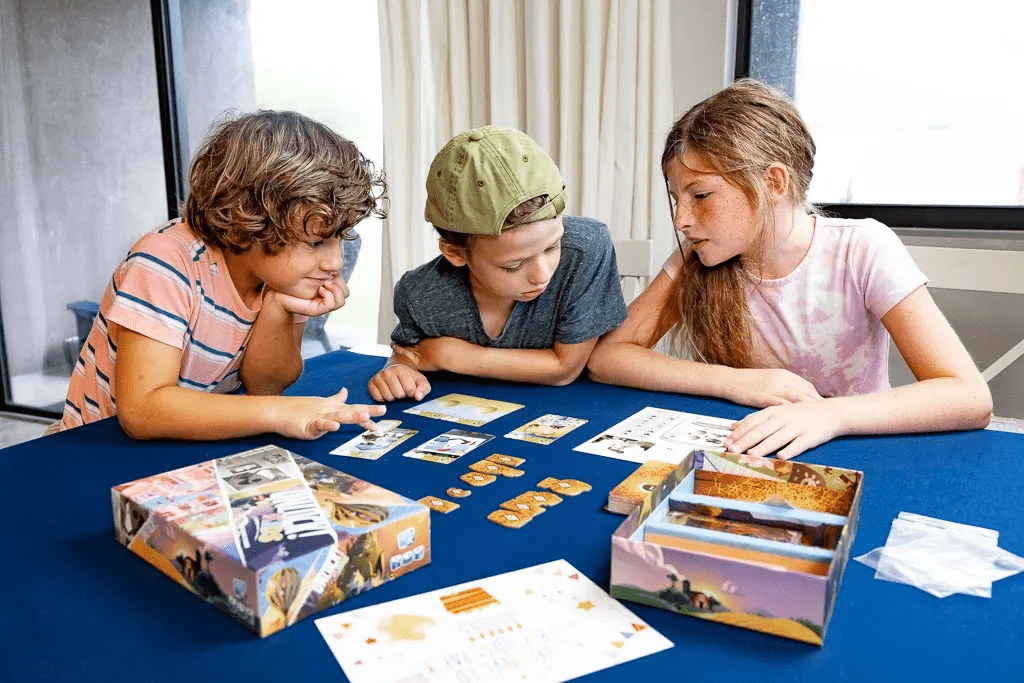
Interactive games serve as more than just entertainment; they are instrumental in nurturing a child’s burgeoning cognitive abilities. The strategic use of such games can lead to significant developmental advantages, equipping children with essential life skills while providing an engaging learning experience.
Interactive games are known to stimulate brain development by engaging multiple senses simultaneously. They often incorporate visual, auditory, and tactile stimuli, creating an immersive learning environment that improves memory, attention span, and problem-solving abilities. These games challenge players to think critically and adapt quickly, fostering adaptability and perseverance.
There is a wide array of interactive games suitable for kids across different age groups. For ages 8–13, “Pandemic Gaming Twister Air” improves physical coordination and strategic thinking. For ages 2–5, “Vtech 2 n 1 Shop and Cook Interactive Playsets” encourage imaginative play and decision-making by simulating real-world activities.
Key Benefits Of Interactive Games On Child’s Learning Abilities
-
Boosted Engagement and Motivation:
Interactive games grab children’s attention, making learning fun and exciting.
-
Cognitive Skill Development:
These games encourage problem-solving, strategic thinking, and decision-making.
-
Enhanced Memory:
Children strengthen memory by recalling game rules and strategies.
-
Creativity Enhancement:
Unique challenges in games spark imagination and creative thinking.
-
Social Skill Development:
Multiplayer games teach teamwork, communication, and cooperation.
-
Exposure to Emerging Technologies:
Games like Hasbro Gaming Twister Air introduce kids to augmented reality.
-
Personalized Learning Experience:
Games can adapt to the child’s learning pace.
-
Instant Feedback Provision:
Children learn quickly through real-time feedback.
-
Fostering Self-Directed Learning:
Kids explore independently and build lifelong learning habits.
Summary
Interactive games significantly boost cognitive development by blending learning with fun. They enhance memory, problem-solving, creativity, and social skills while introducing children to new technologies. These games create a dynamic educational environment that prepares children for future challenges.
Tags